
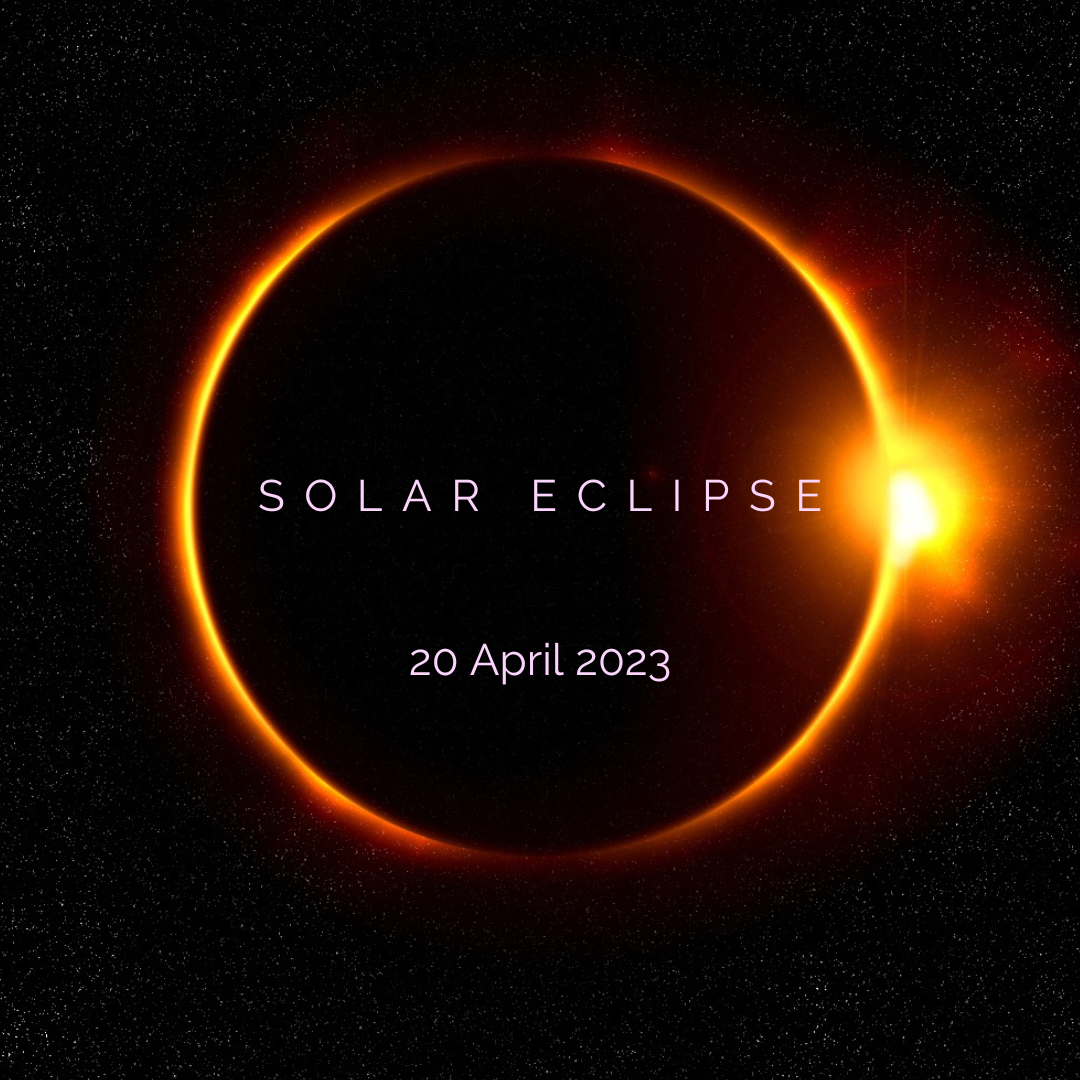
A solar eclipse occurs when the Moon passes between the Earth and the Sun, blocking some or all of the Sun’s light from reaching the Earth.
This can happen only during a new moon when the Moon is positioned directly between the Sun and the Earth.
There are different types of solar eclipses, including total solar eclipses, partial solar eclipses, and annular solar eclipses.
A total solar eclipse occurs when the Moon completely covers the Sun, and it can only be seen from a specific path on the Earth’s surface.
A partial solar eclipse occurs when the Moon partially covers the Sun, and it can be seen from a wider area on the Earth.
An annular solar eclipse occurs when the Moon is positioned further away from the Earth and does not fully cover the Sun, creating a “ring of fire” effect around the Moon.